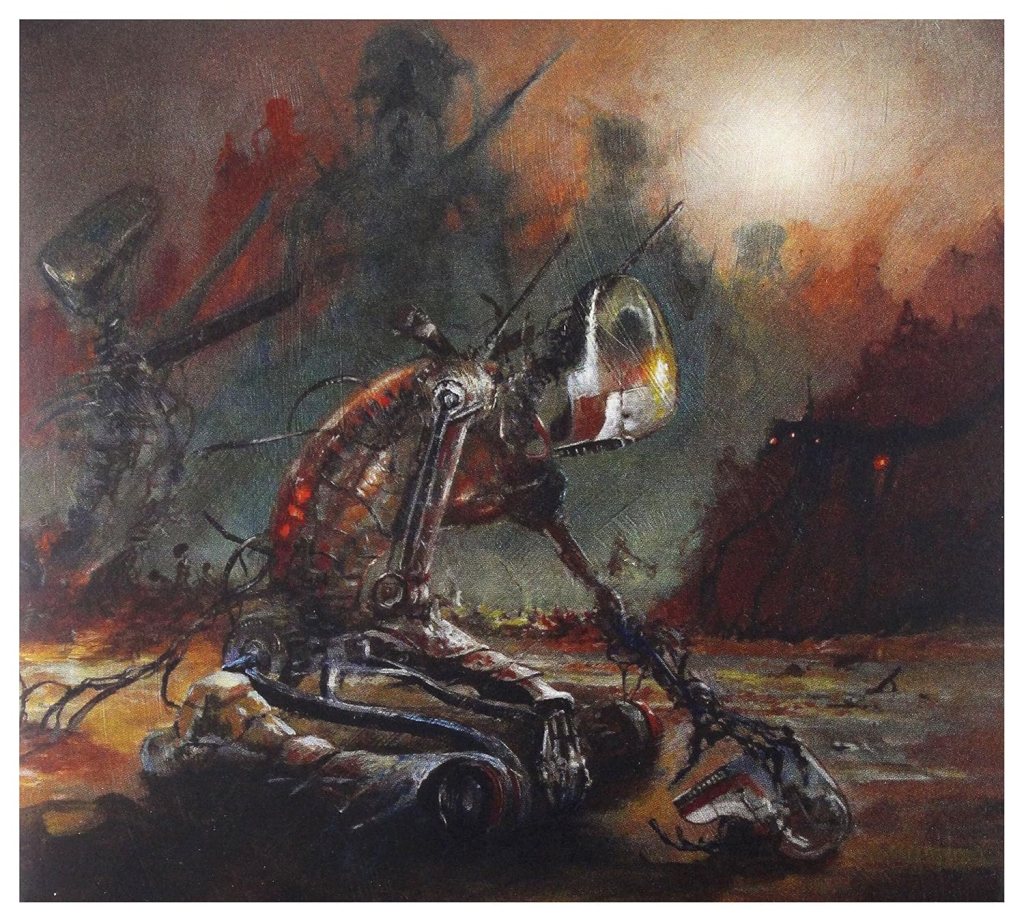
Artificial Brain is one of my favorite bands of all time. The unnerving and cavernous atmosphere of the music and sometimes near-atonal approach to melody create a vibe that pulled me in and got me hooked on that particular sound in death metal. They are releasing their fourth album soon, and the two singles available so far are just as perfect as the rest of their discography.
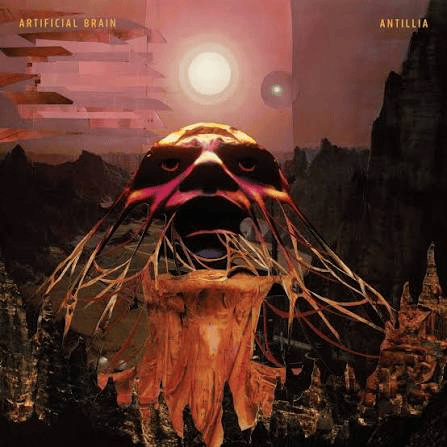
Their album art is always sick, too.
Artificial Brain, and “dissonant” death metal in general, is not easy music to listen to. It’s ugly and harsh. The melody doesn’t always make sense, at least as conventional music goes. The first track I discovered by Artificial Brain, “Synthesized Instinct,” has an opening riff that is almost literally atonal, before converging into a more melodic and heavy death metal progression. I was immediately in love with this odd sound – I am a veteran metal listener and musician as it is, and was no stranger to dissonance and atonality in metal music, but this particular brand of Deathspell Omega-esque ugliness in a death metal band is what I wanted more of.
What is it about dissonance that I love so much? There’s a lot I could say with regards to what I like, but it goes deeper than simple taste. For some people, such as myself, dissonance and ugliness and melancholy and horror media bring a particular kind of comfort that goes beyond just liking and enjoying the experience, but act as a genuine salve to the pain of existence. For those who suffer from disorders such as MDD or GAD (and other anxiety disorders), horror and sad or “depressing” media are often the preference to help process and work through episodes.
And I do mean depressing.
Why is this? If someone is genuinely depressed, wouldn’t depressing media exacerbate this? It seems counter-intuitive to listen to sad music when you yourself are already feeling sad – but especially for people whose brains are wired this way, tragic and even anxiety-inducing media has been found to help, and I get it.
There are a few reasons this seems to be the case, which range from alignment of internal versus external stimuli, to acting as a sort of regulator for adrenaline doses when someone’s emotional baseline is too low. Speaking to anxiety in particular, Scaring away anxiety: Therapeutic avenues for horror fiction to enhance treatment for anxiety symptoms by psychologist Dr. Coltan Scrivner, explores the relationship in detail.
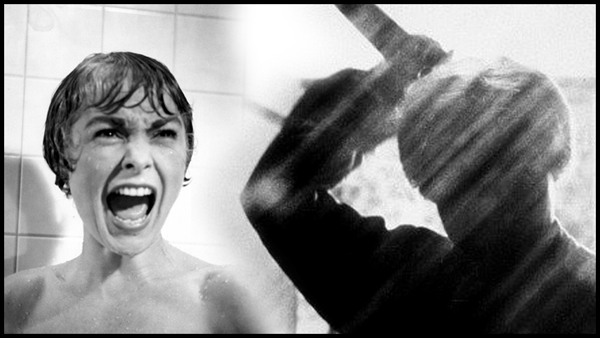
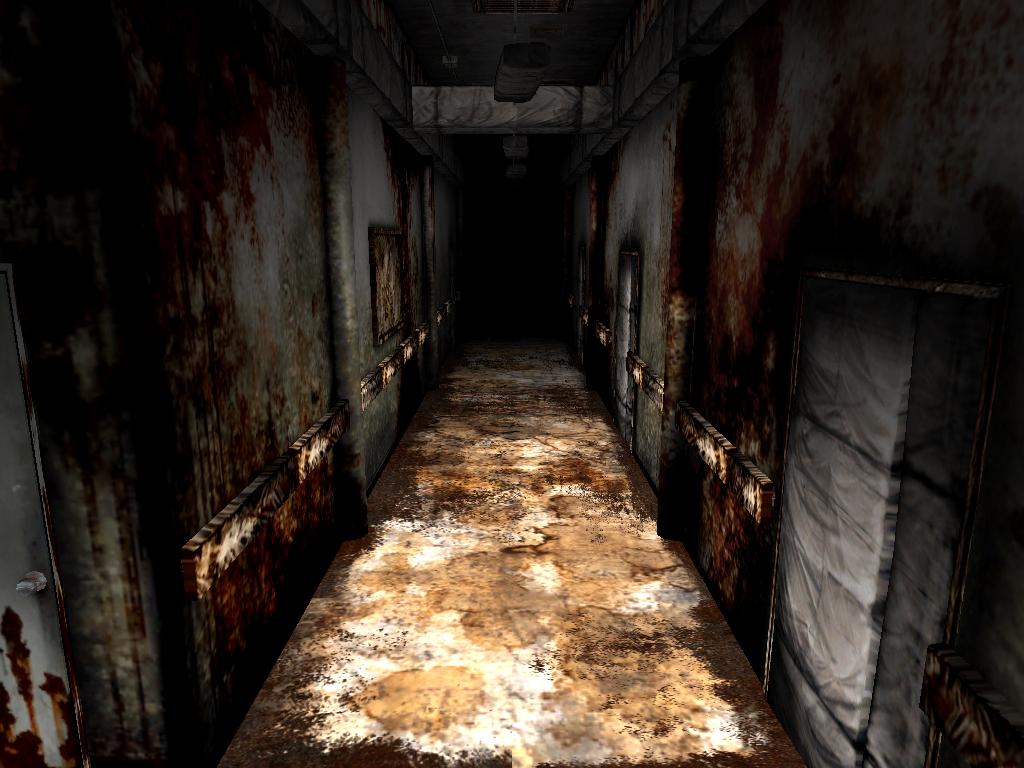
Psycho (1960)
For people who suffer from anxiety or depression, the adrenaline that a horror movie provides can act as jumper cables for emotional regulation. For maladaptive anxieties (basically, anxiety that goes beyond evolutionarily beneficial anxiety), the controlled environment of a horror movie (or game, or book, etc.) allows an audience to experience anxiety and fear in a safe place. Someone who suffers from an anxiety disorder can effectively dose themselves with controlled amounts of anxiety from horror media in a form of exposure therapy, and learn to better adapt to those feelings in less controlled environments (Scrivner).
Directly related to the act of deliberately inducing anxiety is the “come-down” that follows, as the body recovers from the sudden anxiety spike and returns to a more “normal” baseline – the relief that comes from feeling safe after experiencing even simulated anxiety can be the part of the experience that is sought, and through repeated exposures can also become a positive association. When someone knows that a reduction in stress and anxiety is what follows an anxious episode, it can help ride out the anxious episode itself (Scrivner).
So, yes, horror and jump scares can actually be healthy coping mechanisms for those with anxiety – but what about melancholy? Sadness, bleakness, depression – the feelings associated with the umbrella of dissonance, those things that are objectively antithesis to harmony in visual and tone just as they are in music – how can that be calming rather than just indulgent exacerbation?
When someone is depressed, consuming positive or uplifting media can have no or even ill effect, and some thoughts on this point to a misalignment of internal and external stimuli – basically, if I’m morose, caught in a bleak maelstrom, how am I meant to identify or engage with media that doesn’t align with what I’m feeling (or feeling the absolute absence of)?
In a journal on the topic of the “tragedy paradox,” The pleasures of sad music: a systematic review (Sachs ME, Damasio A and Habibi A) Dr. Sachs (et al.) explores exactly this. A concept even ancient Greek philosophers pondered, the “tragedy paradox” suggests that humans seek tragedy and sadness in media despite the negativity of the emotion itself. There is disagreement as to whether sad media (music being the primary example used) produces genuine emotion in the listener, or whether it cannot produce emotion even if the emotion can be perceived by the listener. Regardless, there is a measurable relationship between what sad music evokes and how it affects listeners, including physiological responses (such as changes in heart rate, etc.) (Sachs, et al.)
In short, “pleasurable sadness” is a real phenomenon for people, and the specific way in which people with mood disorders, and especially MDD, process pleasurable sadness within music differs from individuals without mental illness. Per Sachs, “Participants with MDD show prolonged or heightened activity in the amygdala and ACC when they process stimuli that express negative valence,” with the amygdala being responsible for things like adrenaline release and processing emotions. Those with MDD have a stronger and even positive response to sad (and dissonant) music, with a brief mention of increased activity in the hippocampus and amygdala when listening to dissonant music (the memory and emotion centers of the brain) (Sachs, et al.)
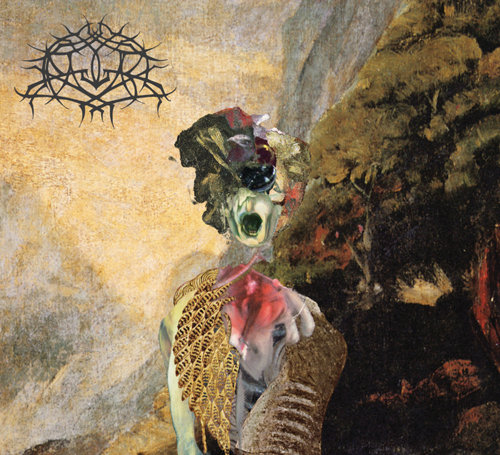
Krallice
Dimensional Bleedthrough (2009)
Other considerations for why dissonant or sad media aligns with those with mood disorders offer similar explanations – emotional congruence, cognitive matching – the implication that dissonant music, being generally more complex, allows listeners to process more complex emotions, and provides a safe space in which to do so, much like horror movies for sufferers of anxiety. When the mood of the music matches the mood of the listener, it can help the listener work through what they are feeling and experiencing.
There is a kind of affirming interaction when listening to or consuming dissonance in media – when someone’s mood is low, it can be helpful in processing a swirling murk of emotion to listen to a chaotic wall of ugly sound, blanketing the listener in the same emotions they’re feeling inside. It justifies and reinforces those emotions as real, and offers the suggestion that, ostensibly, here are people who feel what you do – shown through the music, or film, etc. Whether simulating anxiety through horror, or choosing sad instead of uplifting music when one is feeling sad themselves, or choosing atonality to make sense of what feels like an atonal emotional state, aligning external stimuli to internal states can yield a net positive outcome.
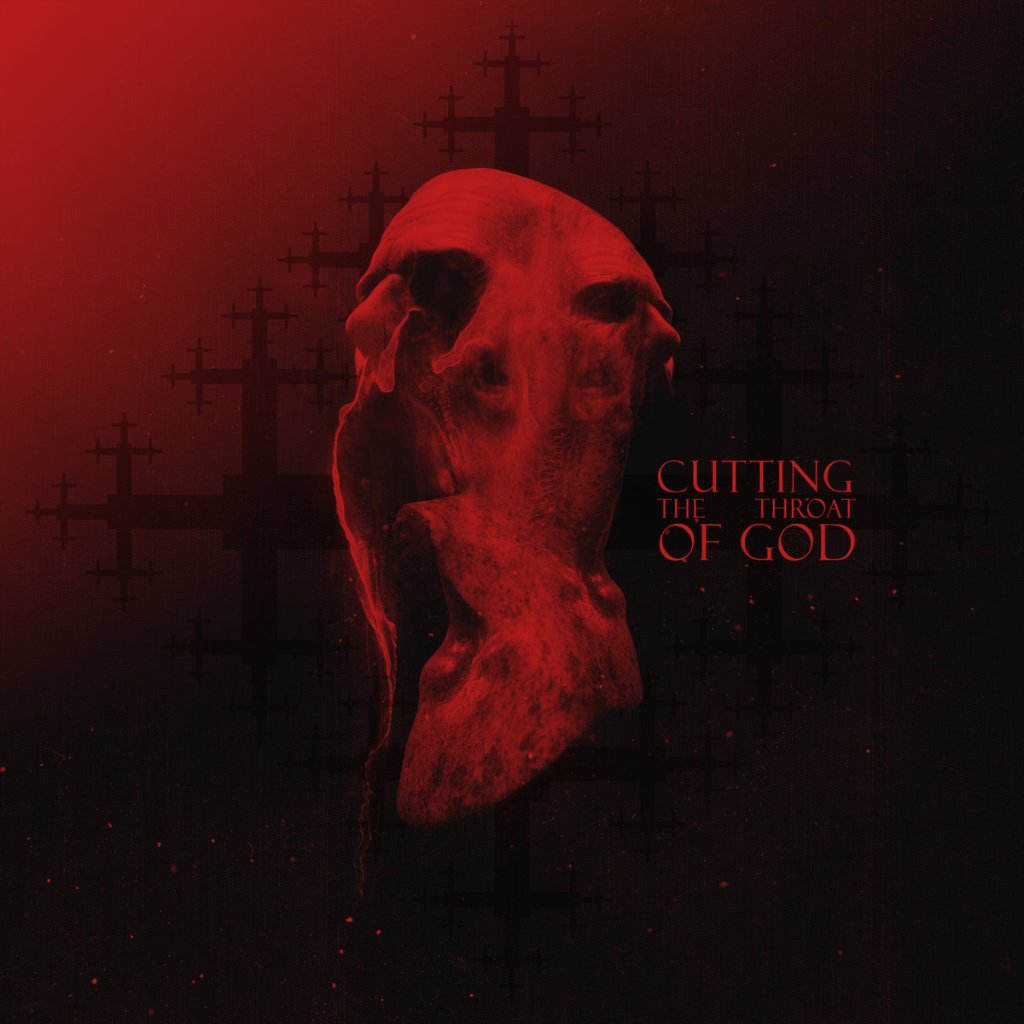
Ulcerate
Cutting the Throat of God (2024)
When I’m not in a particularly positive space, I gravitate toward bands such as Ulcerate, Krallice, Artificial Brain, and Imperial Triumphant, among others. Extreme metal is not afraid to engage with complex emotions, and these bands in particular dive deep into dissonance and atonality (and a little sadness, admittedly), and it is within the chaotic walls of noise and strange harmony that I find a sense of peace and affirmation. Ulcerate in particular craft an especially haunting and yearning sound that is hard to find anywhere else, and it is the ability to actively explore this very specific headspace that can really help, despite its objectively bleak sound.
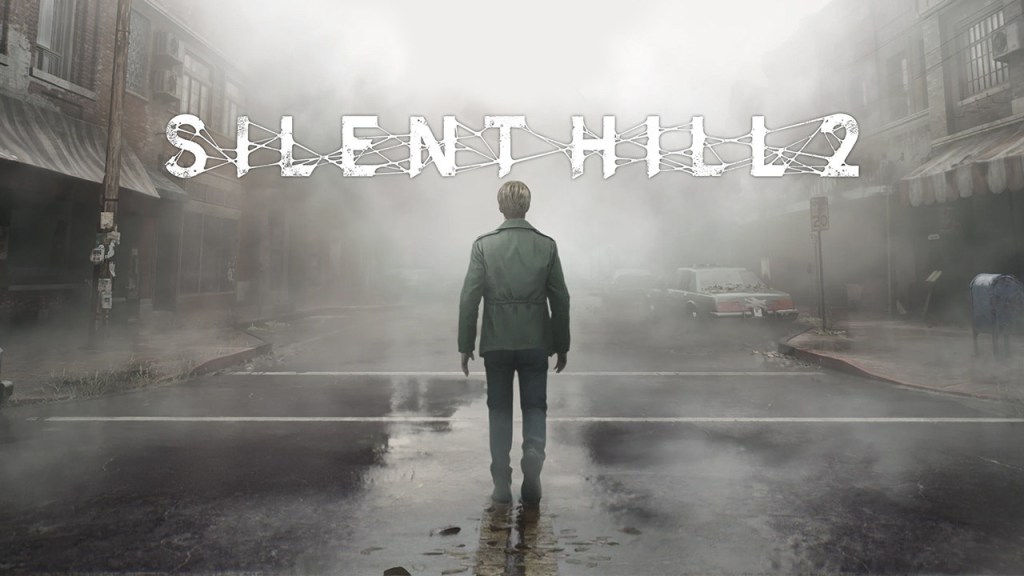
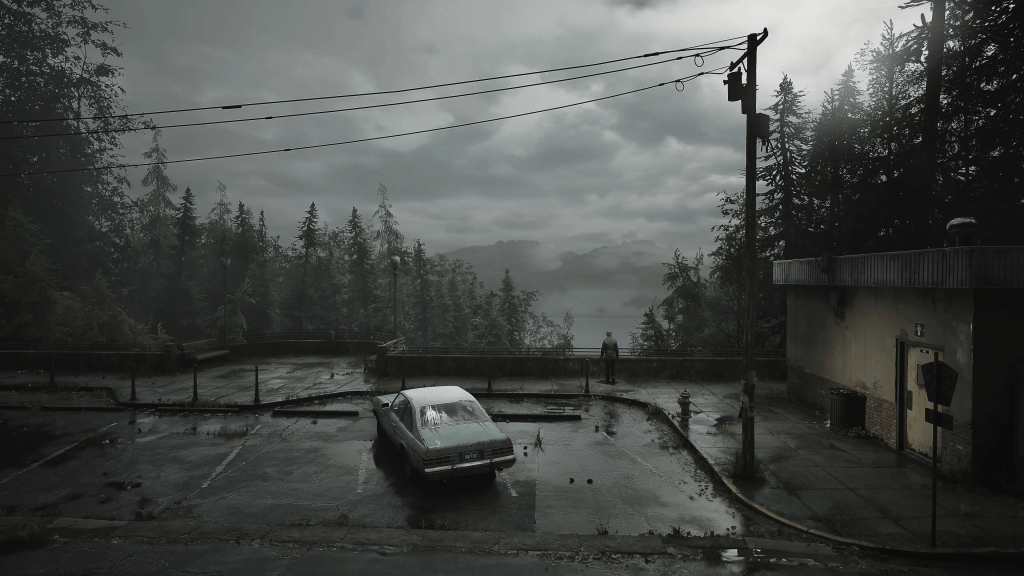
There is a difficult-to-articulate sense of release – of tension, of the mind stuck in first gear – when the unpredictable progressions of dissonant death metal flow. Like the perversion of the real world into Fog World into Otherworld in a Silent Hill game, twisting what we consider normal and what we expect into something uglier and hard to reconcile with, musical dissonance lets me sit with my mind in a way other music can’t.
The sound of Ulcerate, Artificial Brain, and others are the musical equivalent for me of the Otherworld of Silent Hill (I say with full awareness of the series’ own strong musical identity and associations – those apply too) and horror media that explores the unnerving and isolating feeling of the Otherworld provides a form of catharsis for me in the same way.
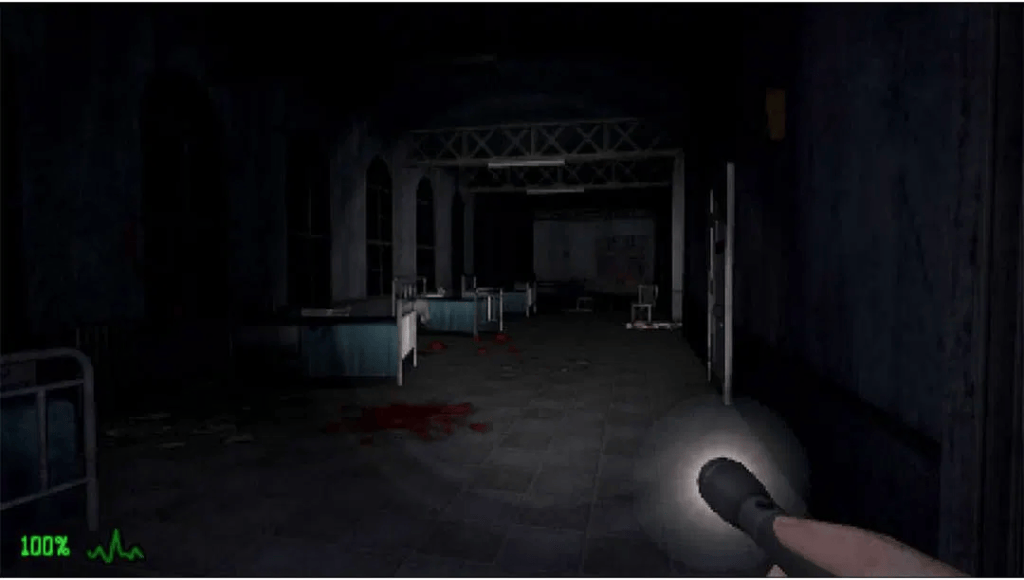
Just something about decrepit hospitals, I guess
Games like Dementium: The Ward and the FEAR series (well… everything before Fear 3…) are games I like to sit down with when I want to submerge myself into that isolating atmosphere. Both wear their Japanese horror influences on their sleeves, so maybe there is some Silent Hill DNA inevitably in these games as well (absolutely in Dementium‘s case).
Something about wandering the eerie halls of a rusted and gore-splattered hospital brings a sort of odd coziness in its oppressive atmosphere that I find unique to games like these. There is an otherworldly strangeness there, where a place like this certainly can’t be “real,” but that alien, slightly-off presentation of a familiar place like a hospital (or a school, or an apartment building…) in conditions far beyond normal decay brings its own visual dissonance, which is where I think I equate the feeling of musical dissonance and its evoking of the same feelings in me.
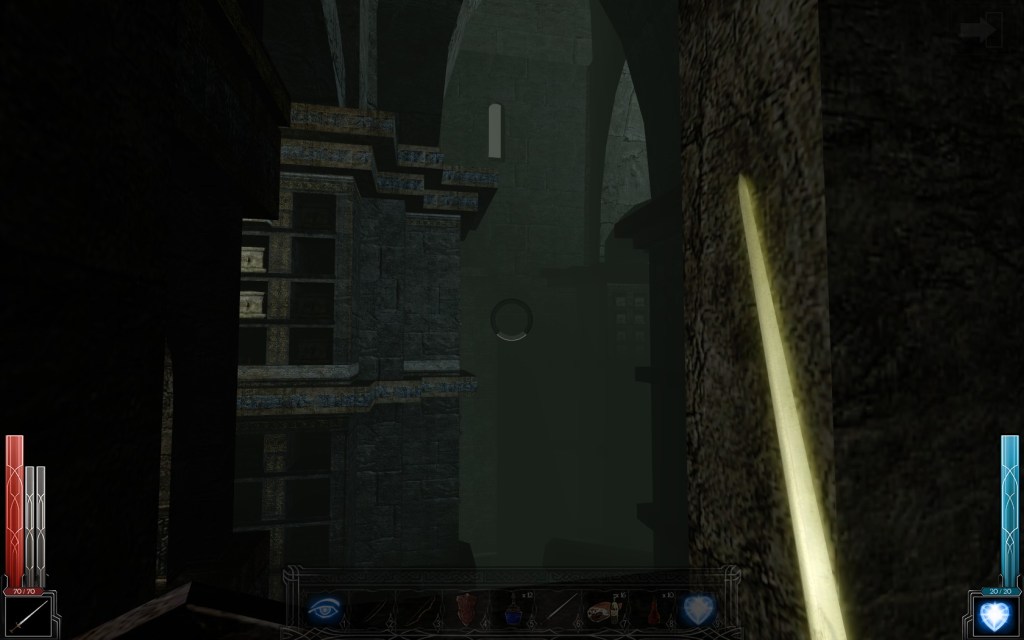
Catacombs are spooky in the right way
Perhaps amusingly, my first realization that games and music could take my brain to the exact same place with specific regards to dissonance involves the relationship of Dark Messiah of Might and Magic, the black sheep 2006 entry in the Might and Magic series, by the most tenuous of threads, and dissonant avant-garde black metal band Deathspell Omega. I don’t really have anything grand to say other than songs like “Chaining the Katechon” and “The Shrine of Mad Laughter” take me to the exact same place as the atmosphere of the House of Ashes or the Necropolis in Dark Messiah – brains are weird.
But, this was my first real example of the deeper connection I was feeling – to that of dissonance and ugliness and comfort.
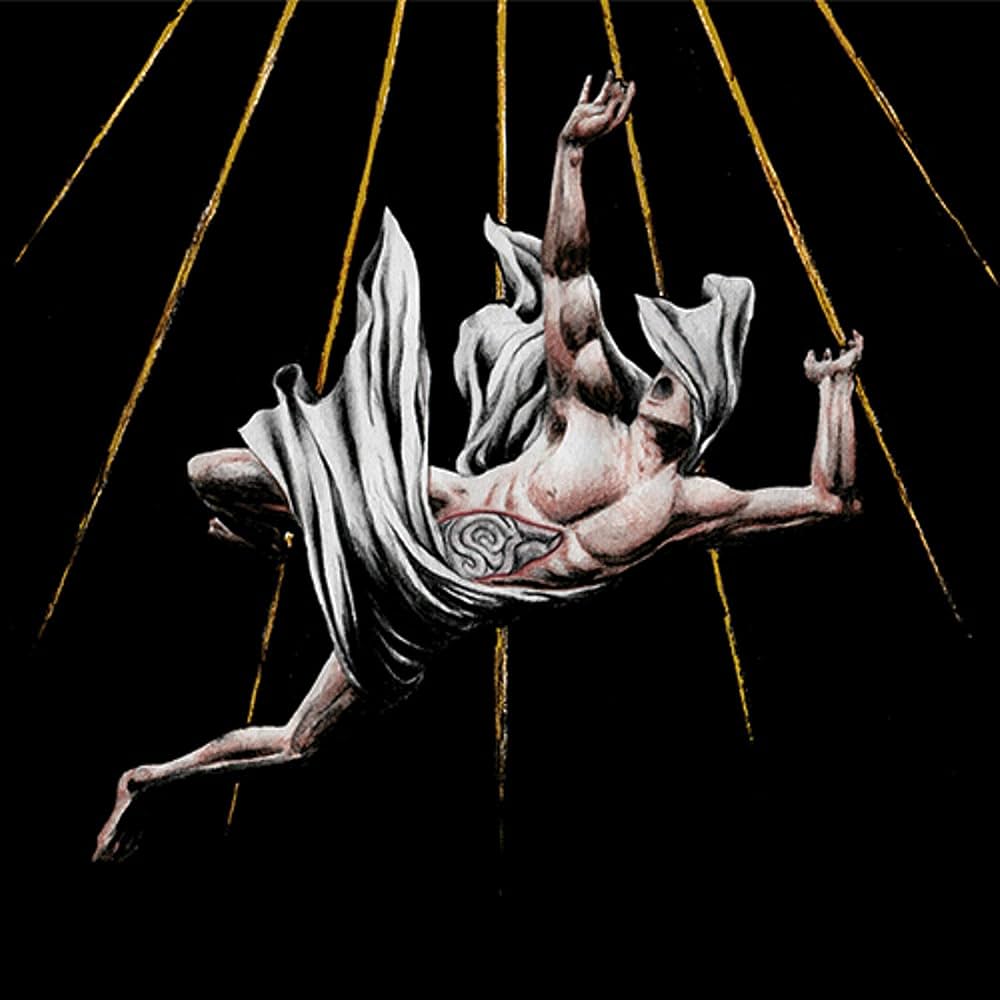
Deathspell Omega
Fas – Ite, Maledicti, in Ignem Aeternum (2007)
Of course, all of this is not in any way to say there is one correct way to consume media or to self-soothe, or that this is how those with mood disorders always or should engage with media – plenty of people who suffer from mental illness in any form (or none at all) find positive, uplifting, more traditionally comforting media to be exactly what helps when things are difficult. I have just never been wired that way, and have always found comfort and catharsis in dissonant, ugly things, and it wasn’t until much later that I began to learn of the studies in the relationship between those exact things, and that other people experience this as well.
I also have an immediate surge in my mood when it is raining, so maybe it is just how I’m wired.
Articles and journals cited:
Scrivner, C. (2025, February 20). Scaring away anxiety: Therapeutic avenues for horror fiction to enhance treatment for anxiety symptoms. https://doi.org/10.31234/osf.io/7uh6f_v3
Sachs ME, Damasio A and Habibi A (2015) The pleasures of sad music: a systematic review. Front. Hum. Neurosci. 9:404. doi: 10.3389/fnhum.2015.00404






Leave a Reply