For as long as I can remember, in both life and in video game worlds, I’ve had intense, perpetual wanderlust. I always wonder what’s across that field, over the mountain, on the other side of the sea. Games have come so far in their ability to let us travel to more places, to explore more nooks, and it has made me realize that this feeling exists in a permanently liminal and vaporous space that vanishes the instant you touch it.
This is a feeling that I experience quite frequently, and I’m sure basically everyone else does to some extent, but there’s something so specific about the way it manifests, and I think about it a lot. I also believe that, at least for people like me, it directly influences the enjoyment of older games, and contributes to the feeling that games just felt different in the before-times (whenever that was).
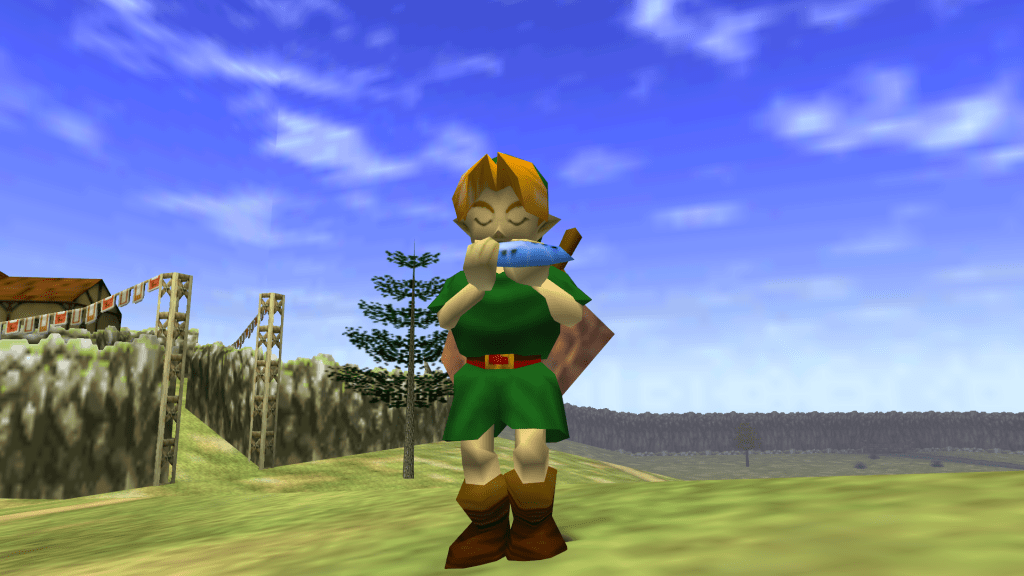
I have been playing through The Legend of Zelda: Ocarina of Time with a dear friend in what is probably my one millionth playthrough of this incredible game, and it has catalyzed my thoughts on this subject. It also serves as a point of comparison for later Zelda titles that achieve more explicitly what I feel implicitly within these older Zelda games – Ocarina of Time was sort of an early entry into the open world genre, though purists may disagree. No, it doesn’t have the freedom or square mileage that “real” open world games do, but I think it did what it could with its hardware and experience. I won’t even call it Zelda’s first attempt at a pseudo-open world, as the original Legend of Zelda arguably already is, but I do think it’s the series’ honest attempt at replicating the freedom of that first game with its 3D debut.
Alright, so what’s my point in all of this? I’m going to try to explore a very particular feeling that I think becomes harder to feel the closer we get to it, and that is not in any way a criticism by me or a failing by these games, but is literally the nature of what this kind of wanderlust is to me.
I want to go to the other side of the mountain… but once I’m there, then what?
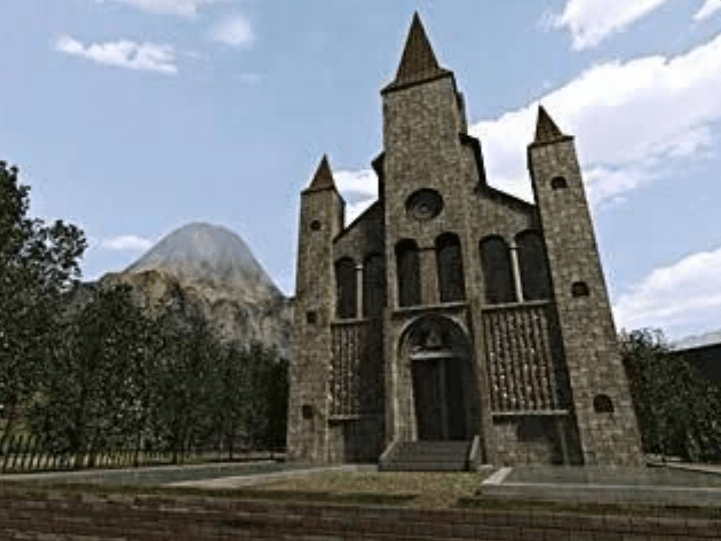
Ocarina of Time has many places that trigger this feeling of wanting to GO there, and I can’t. I mean, yes, I can go to Death Mountain as we see it behind the Temple of Time above, but I have to travel the very specific path laid out for us to get there. I’m talking about these trees over the iron fence to the left, and beyond that. I want to go there… and I can’t. That is what adds so much to these places for me – there’s so much to see in these inaccessible areas, because I can never go there and I must use my imagination to fill in those blanks. Yes, I can go to that mountain in the distance through the one path we’re allowed, but… what’s around the back of the Temple of Time, though?
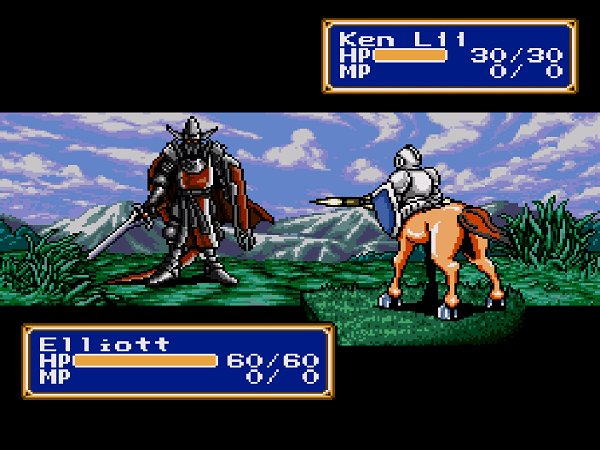
SO cool. The stuff behind the guy. He’s cool too though
Traveling back in time to Shining Force for the Sega Genesis, my favorite tactics game ever, we can see the absolutely gorgeous sprite work on display during the combat sections. While the majority of the game looks like this:
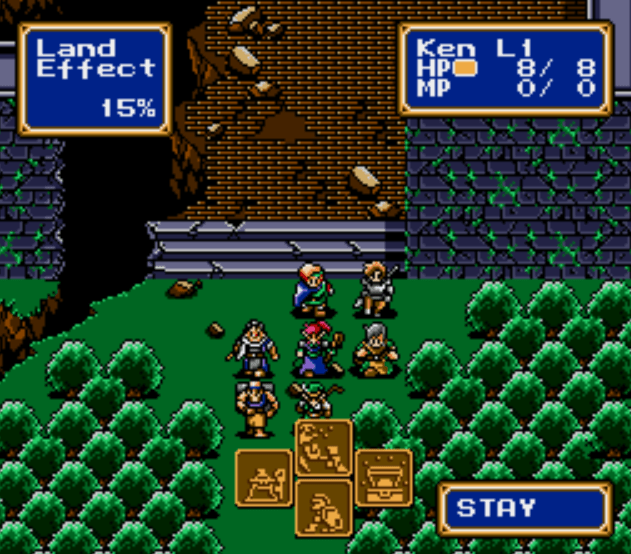
The in-combat screen when units engage each other has beautiful renditions of the terrain you are currently fighting on, that the enemy is standing on, and the participants in that round of combat. Every time I experience combat in this game (and its sequel), those backgrounds really pull me in, and I desperately want to GO there. And, technically, you do… as you travel the top-down overworld, you travel to all sorts of different places – in the mountains, in enormous plains, over the ocean, in thick forests, in ancient halls full of robots and machinery… and that’s a discussion for another post. In these background renditions of your current combat terrain, you can still look out into the distance and say “wow, I wonder what’s over there…”
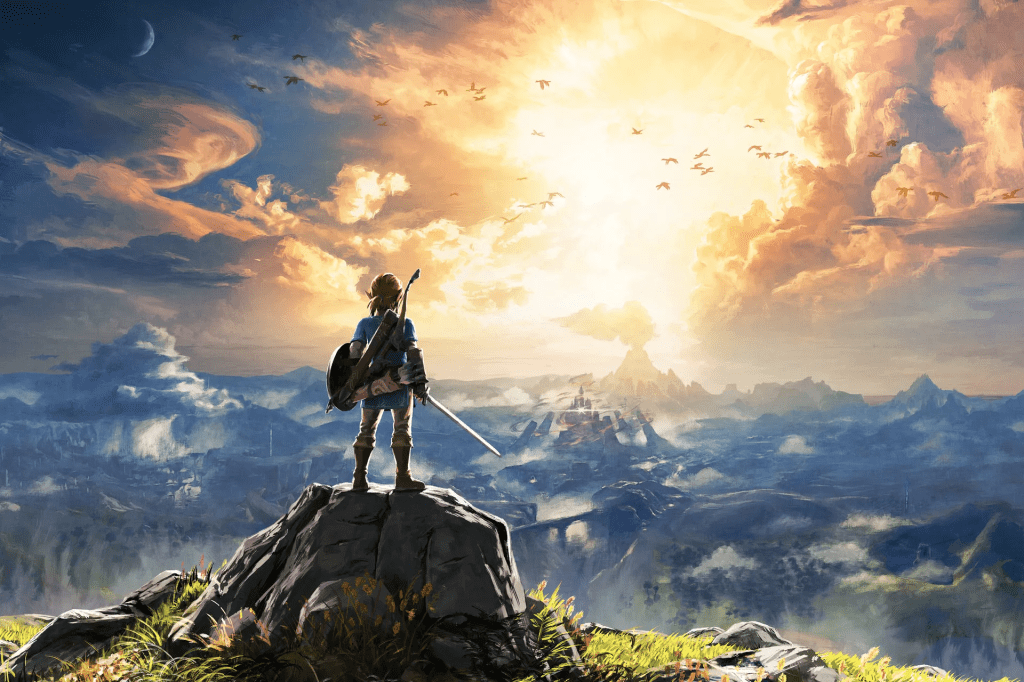
Enter The Legend of Zelda: Breath of the Wild, which famously sought to answer this question very directly by saying “if you see it, you can go there,” and that gets to the core of what I’m talking about. Perfect! Right? Finally, I can GO to the places! And yet, ultimately, this has made me realize that wanderlust and exploration in video games is a forked crossroads:
When exploring a world in a video game, one of two things must be true: either you can go there, or you can’t. All video games always have both of these things, context depending. In older games, like Ocarina of Time or Shining Force, you can’t go… most places, really. You can SEE a lot of places, and most of those places are backgrounds. In more modern games, which seek to address this feeling very specifically, you can go most – or all – places.
Well, until you hit the edge of the map.
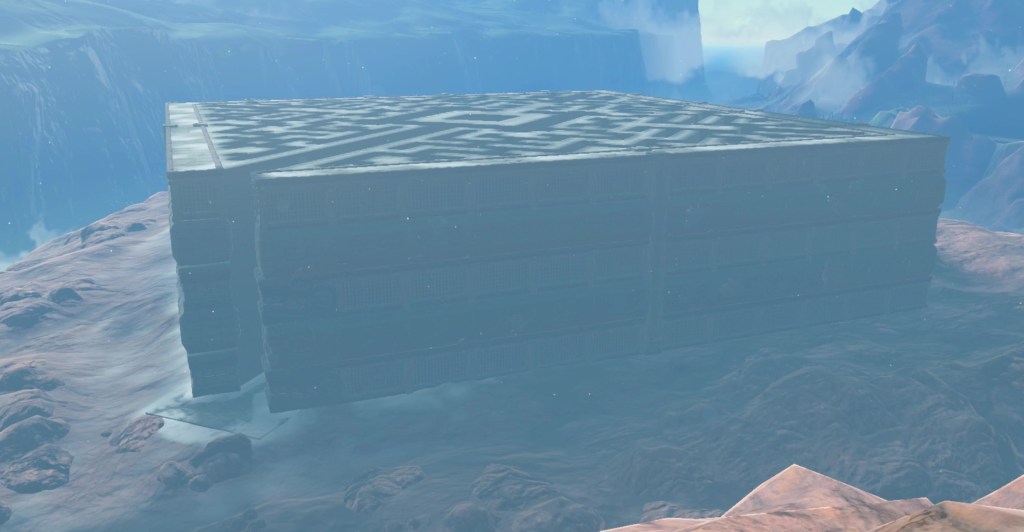
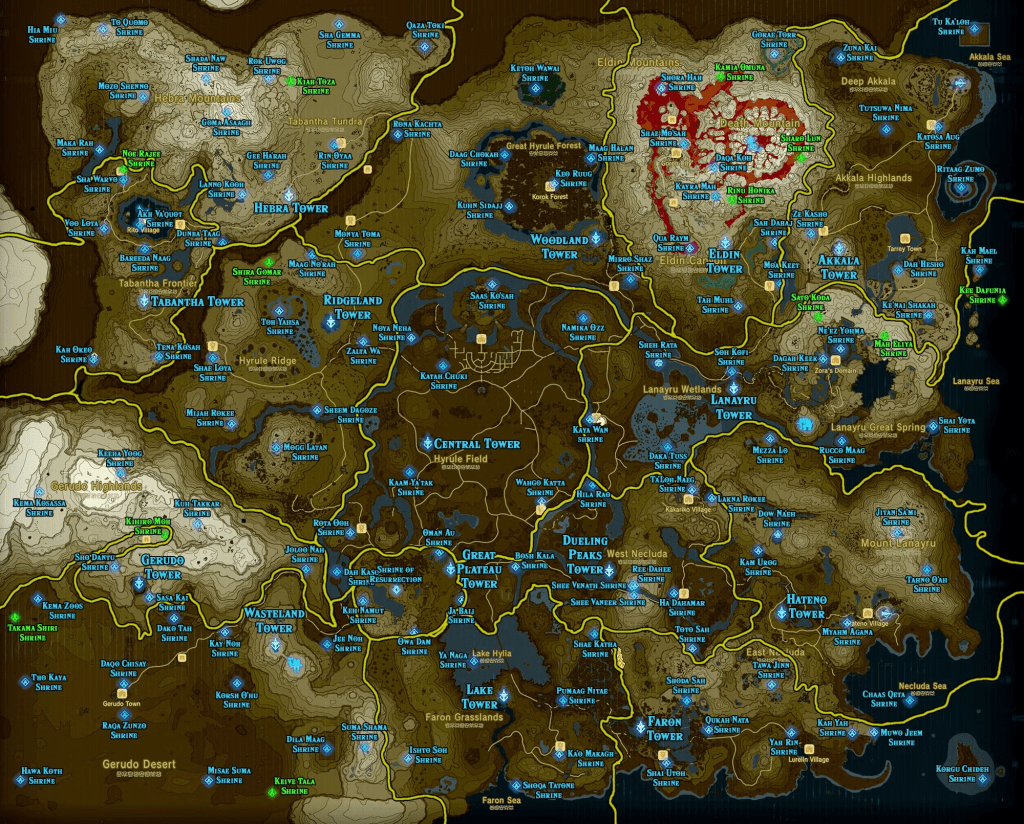
Unfortunately, Breath of the Wild is a video game. If you see it, you can go there… until you run out of map. And once you do, you’re right back to what I’m talking about: You can see something that you can never, ever go to. Eventually, it’s just a background for you to look at, long for, and never access. And that, to me, makes those places so much more compelling by design. Yes, I can explore every inch of Hyrule that I want to, and that’s awesome! It’s what we’ve always wanted in a Zelda game! I wouldn’t change anything about that. But when I reach the northern edge of the map, deep in the Eldin Mountains, and I see the massive gorge that separates Playable Hyrule from Out-of-Bounds Hyrule (is north out of the map still Hyrule?) I want to go THERE. The reason it’s even more compelling is because, in being able to explore everything that’s within the playable map, it reveals the other side of that wanderlust coin, the part that vanishes the instant you touch it: once you go there, it’s gone. Not the place, but that feeling. That place is no longer a mystery or a wonder, because you went. Does that mean the place isn’t beautiful or cool? No way! Exploring and finding new places is always a wonderful, exciting, fulfilling experience. What I’m talking about is the very specific loss of the mystery of a place you haven’t gone to once you get there, and by its nature, being able to go there is what shatters that feeling.
Jesus.
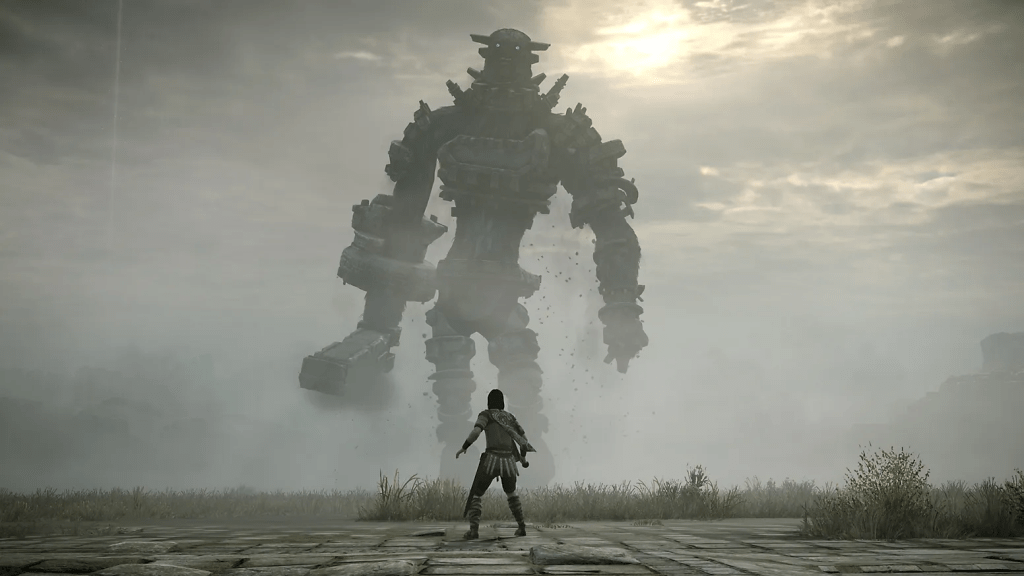
Maybe part of the reason these inaccessible areas are so compelling is because they tend to look so… natural. In a video game world, the game must be populated with things to do. There is a natural saturation point of “clutter,” in open world games especially, that players always make reference to. Some games are too big and too sparse; other games have far too much per square meter of playable space; the size of the map isn’t what makes it a good open world game; you name it. Somewhere in the center of all of this is the “appropriate” amount of clutter for the open world to contain. You can’t have an empty world and still have a compelling game.
Well…
But in non-playable areas, especially out-of-bounds, you don’t need any clutter. No one is going there, so you can do whatever you want, but you also don’t want to waste precious resources and polygons, so it’s kept sparse. I think this is why those distant out-of-bound lands are so magnetic. They don’t look like the rest of the game most of the time, and can often seem even more grand than the playground you’re allowed to stay in.
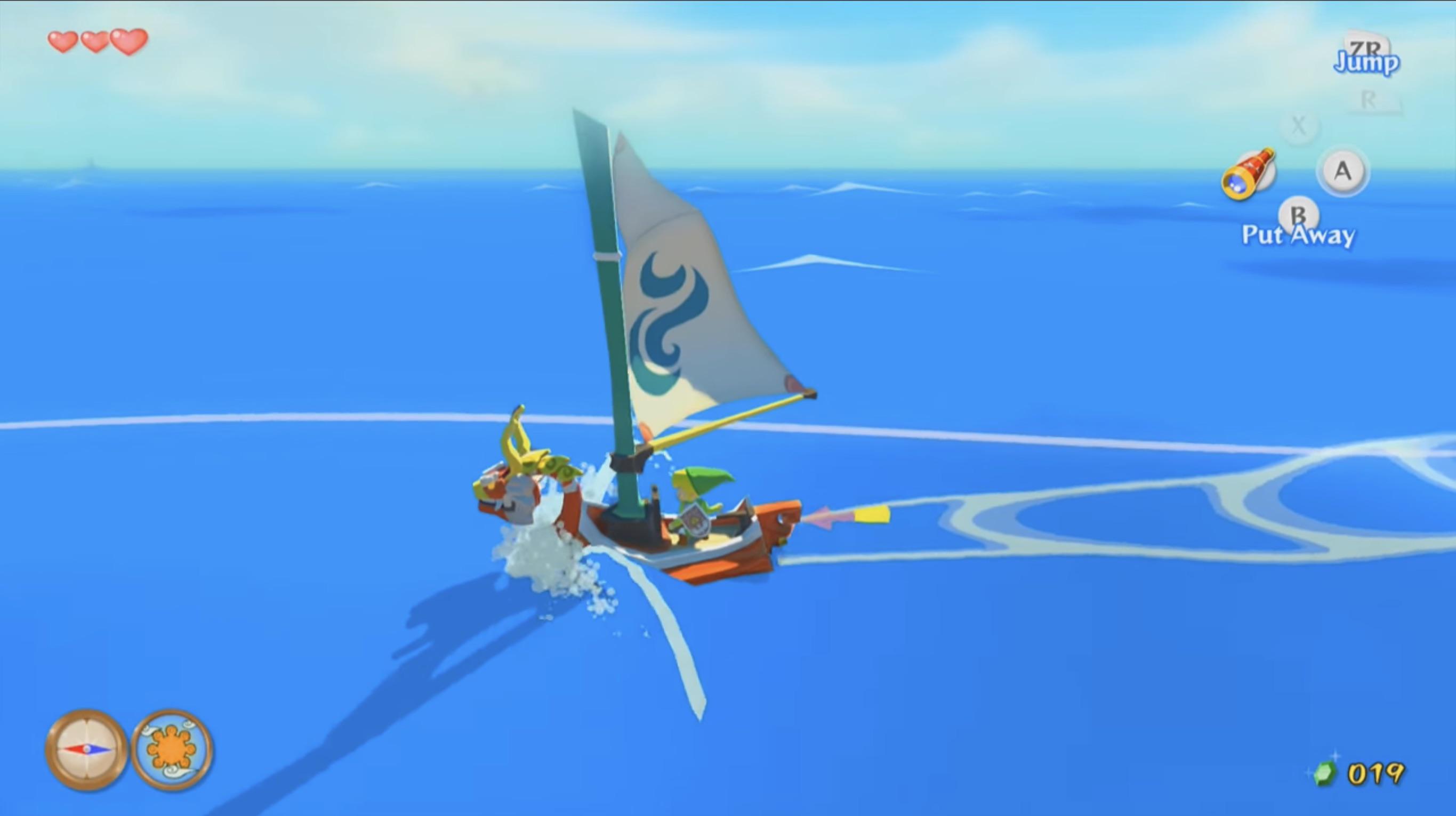
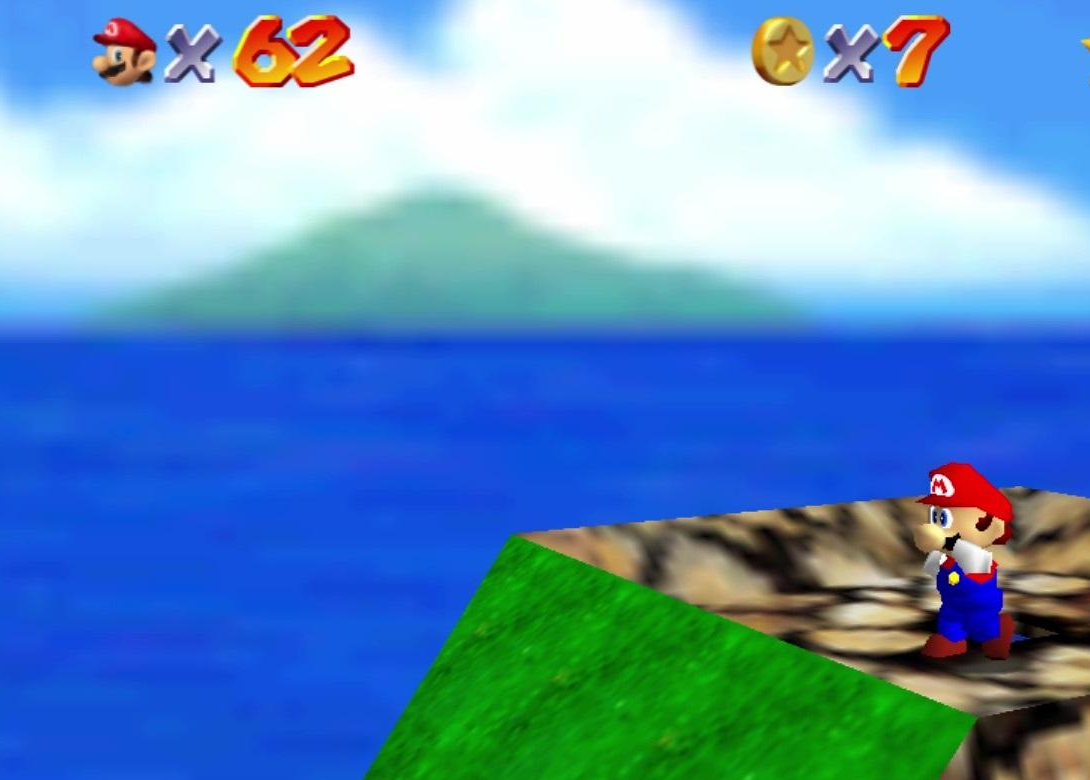
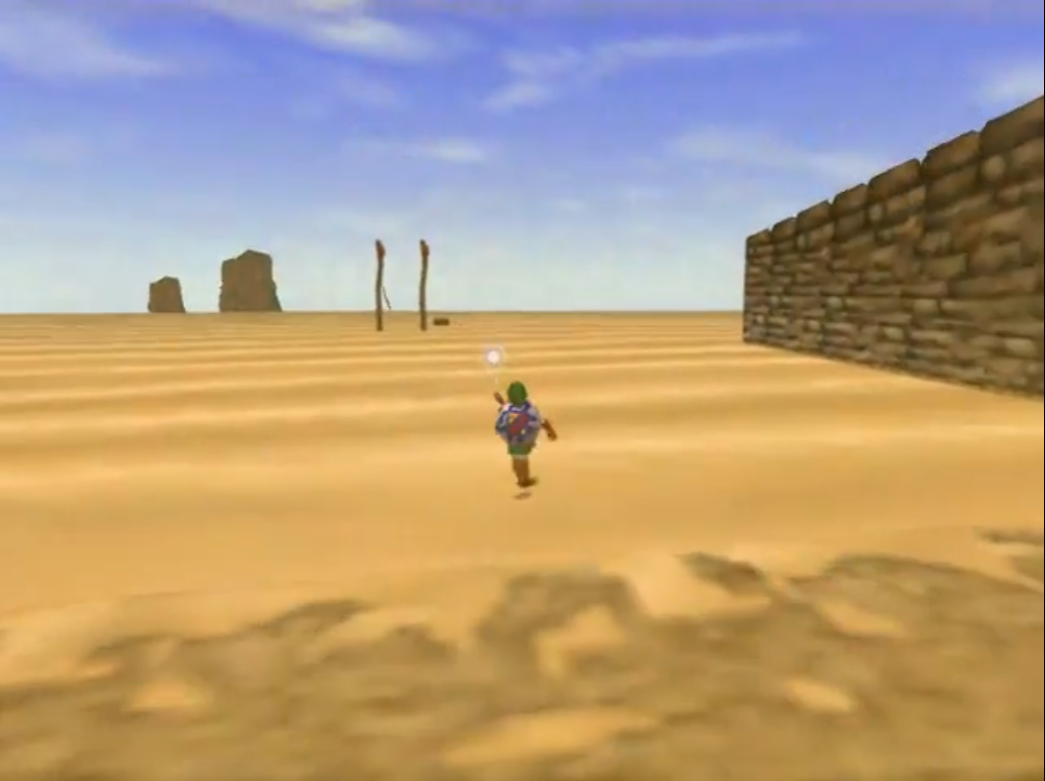
The vast landscapes of out-of-bounds
When sailing the Great Sea in The Wind Waker, you can see distant, explorable islands in any direction because of necessary open world clutter, but outside of the map is true open ocean. Super Mario 64 has similar backgrounds for its out-of-bounds; distant island jpegs in all their blurry glory. The Haunted Wasteland in Ocarina of Time juxtaposes this pretty sharply in the transition between the Gerudo Valley portion of the desert and the Haunted Wasteland itself – the Wasteland hides its playable area with dense sandstorms, but from the outside looking in we see a vast, flat, barren desert, one that we can never explore in the form we see from here. It is impossible to go to any of these places, and they look so different from anything we find in playable areas, it really amplifies my video game wanderlust.
I feel like, for me, it’s because these places can never be explored, it forces our imagination to picture what they COULD be like. I love the sprite work in games like Shining Force because the minimal detail in the overworld gives way to beautiful vistas in the brief passages of combat screens, which informs me as to what the game world I’m playing in actually looks like when I’m not seeing it from the sky.
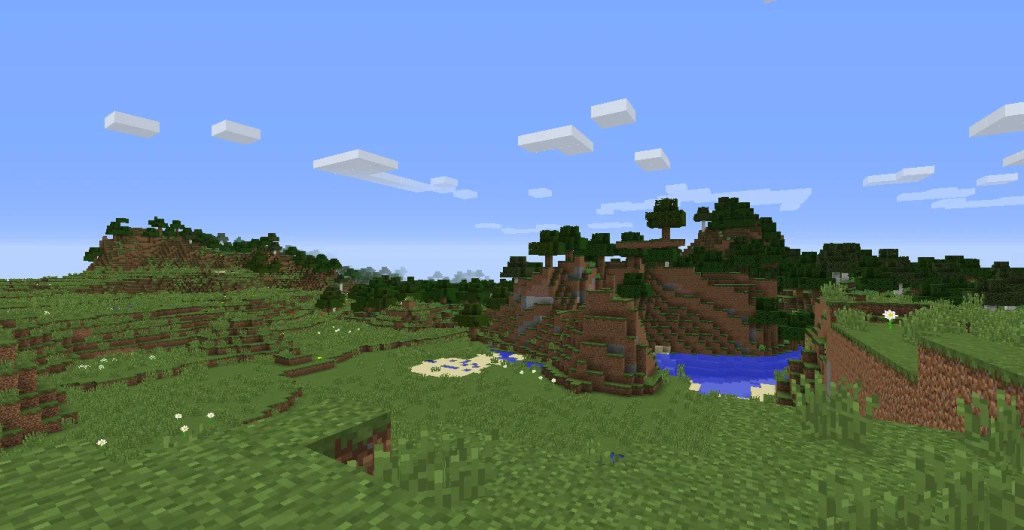
Of course, not all games have an edge to their map, necessarily. Minecraft allows players to explore in any direction for as long as they would like to travel. Of course, it’s not true infinite space, and maps are generated by seeds, but effectively, no one is really hitting the map’s edge. This allows us, the wanderers, to explore what’s just beyond the next forest or mountain… and then keep going. It keeps us in that perpetual state of wondering, then discovering, and then wondering again once we have discovered. Of course, Minecraft is also unfortunately a video game, and plays by video game rules – there are effectively indefinite combinations of things that make up The Map, but within the bounds of what makes Minecraft what it is. Basically, there are only so many ways to make a forest in a game about blocks that keeps it fresh every single time. The “edge of the map” in Minecraft is more about when new places are just kind of rearranged old places for the player, you could say.
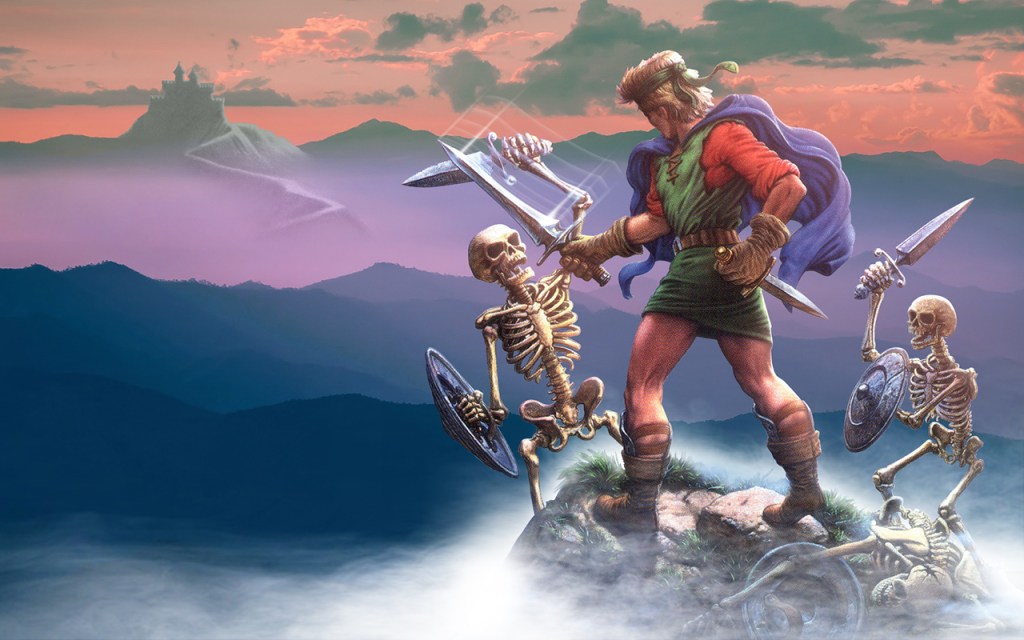
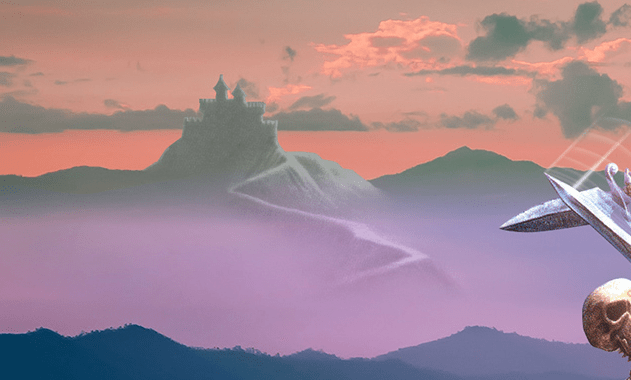
I love the box art for Shining Force. It’s what drew me to the game in the first place – but while I love the wonderfully 80s fantasy action happening in the foreground, my attention is forever drawn to that castle in the background. I want to go there, and I can’t. At least, not in the context presented in this specific box art. In an era of games that seek to create more seamless and realistic exploration, there is still no escape from the desire to go somewhere that I can’t, and that’s exactly where I want to be – not there. But, on the way there.

 Astral's Voyage
Leave a comment